Behind the Scenes: The Science Behind Hidden Pictures Puzzles


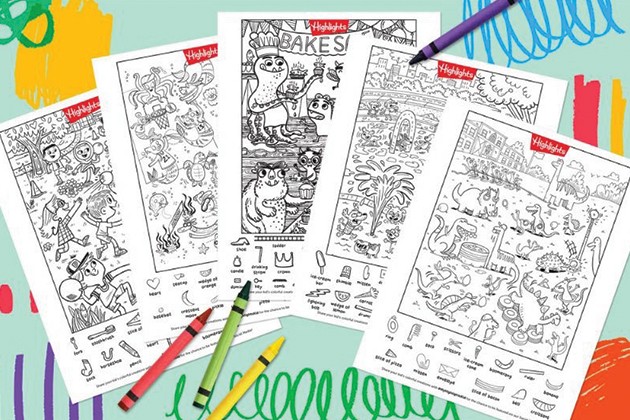
Hidden Pictures puzzles have been a beloved feature of Highlights for Children since launching in 1946. Today, there are over 30 varieties of Hidden Pictures puzzles, all created to challenge and delight from infancy through adulthood. These puzzles have captivated generations of kids, all while supporting their cognitive skills, language development and self-confidence. But how does this process unfold? Why does searching for a banana hidden in a tree (or a fence or a water slide) help a child’s development? Let’s delve into the magic behind the scenes, with insights from Allison Kane, Head of Puzzle Innovation and brainPLAY editor at Highlights for Children.
Creating Hidden Pictures Puzzles
Every Hidden Pictures puzzle requires a creative team involving an editor, designer, illustrator and copyeditor. Together, they dream up and build puzzles that are imaginative, detailed and fun to play.
Step One: Develop the Theme
The first step in crafting a Hidden Pictures puzzle is finding a theme for the puzzle scene.
“We start with a scene idea… say we’re making a puzzle for a book around mythical creatures and unicorns. Then we spend time thinking of all the things unicorns and creatures could be doing, which is a very fun part of the process,” Kane says.
Maybe there’s a disco party at a roller rink, or maybe a unicorn is conducting band practice with dragons, trolls and other fantasy creatures. No matter the setting, there’s always a sense of humor in the details.
“Kids love to laugh, and we celebrate that,” Kane says. “We infuse humor into everything because it’s more enjoyable for kids.”
Step Two: Illustrate the Scene
After the idea for a puzzle scene is ready, the designer sends it off to the illustrator, who begins bringing the picture to life. The illustrator sketches the scene using special Hidden Pictures puzzle techniques.
Some rules the illustrator follows include:
- Make each hidden object clear and fair. If it’s labeled a spoon, it should look like a spoon.
- Keep all hidden objects visible, never cut off or covered up.
- Include a balance of easy and tricky objects to find.
- Use an art style that makes it easy to understand what’s happening in the scene.
Color in Puzzles
Deciding how and when to use color plays an important part in illustrating a Hidden Pictures scene. Color guides the eye and can even change how puzzlers seek and find hidden objects.
“Full-color Hidden Pictures puzzles can sometimes be easier to solve. That’s why the puzzles in High Five magazine (for ages 3-6) are usually in color—younger kids can use color clues to help find the objects,” Kane says. “Black-and-white puzzles are often more difficult because you can’t use color as a clue to where to find a hidden object. Instead, kids use the shape and texture of an object to help locate it. But we have fun with color for older kids too! We just have to make sure the puzzles are tricky enough. A full-color hidden picture scene is fun, but it’s a different gameplay.”
Step Three: Review with Designer and Editor
Once the artist finishes the first sketch, the designer and editor inspect to make sure the puzzle is a balance of challenging and fun.
“The artist sends a sketch, and the designer and editor look at it to make sure the difficulty level is right, the objects are hidden well, and the scene is what we're looking for. Then we go back and forth with the artist, who makes changes until the puzzle is just right,” Kane says.
Step Four: Copyedit
Finally, the puzzle is ready to be tested by the copyeditor.
“The copyeditor looks at the puzzle with fresh eyes. While they’re playing through, they make notes of anything they may feel is too hard or too easy,” Kane says. “They’re also the person who pays close attention to the answer keys and verifies they are correct.”
Any final edits get made, and then the puzzle is ready for publishing!
Balancing Fun and Education
Kids return to Hidden Pictures puzzles because of the balance between challenge and success. Each puzzle actively engages kids, helping to build cognitive development, problem-solving skills and attention to detail with fun always at the center.
“A puzzle needs to be challenging to be fun, but we don’t want it to be frustrating,” Kane says. “If there’s ever a question, we will try to get the puzzle in front of a kid and gauge their level of fun vs. frustration.”
Humor is also a vital ingredient in balancing fun and education.
“If a puzzle has a funny scene, it says, ‘Hi, this puzzle is going to be fun; try it out.’ If a scene is serious, it can be more intimidating,” Kane says.
Hidden Pictures puzzles use different humor types for different age groups.
For younger kids (ages 0-6) there are funny combos or silly scenarios, like a turtle playing hopscotch.
For older kids (ages 6+) it might include a clever joke or pun that takes a moment to figure out, like a stick bug art class where the stick bugs are drawing stick figures.
Puzzle Hint: If you need help finding a tricky object, try flipping the puzzle upside down. It helps to look from a different perspective.
Educational Benefits
Designed with learning in mind, every Hidden Pictures puzzle helps kids develop important skills:
- Cognitive skills: Hidden Pictures puzzles build skills like figure-ground perception, object constancy and visual discrimination—essential for letter and number recognition. Kids also practice attention to detail by recognizing the shapes, patterns and sizes of hidden objects.
- Language development: By matching picture clues to words, early and beginning readers build their vocabulary and reading confidence. The puzzle supports literacy regardless of reading ability.
- Persistence: Sticking to a puzzle, even when it’s challenging, helps build a child’s sense of persistence, resilience, motivation and focus.
The Role of Innovation: Then vs. Now

For decades, Hidden Pictures puzzles have been a favorite for Highlights readers and puzzlers.
“The feedback we hear most is asking for more puzzles,” Kane says. “Which is good news for us. For 80 years this has been a favorite and that doesn’t seem to be changing.”
While the love for Hidden Pictures puzzles remains constant, so does the push for innovation.
“We are always coming up with new challenges,” Kane says. “There are more than 30 varieties of Hidden Pictures puzzles at this point. Everything from the classic black-and-white style to photo puzzles or hidden words to gameplay using stickers. We keep looking for ways to innovate!”
As for the future, Kane hopes the puzzles continue to facilitate connection and create moments of fun in daily life.
“I hope people continue to see Hidden Pictures puzzles as irresistible,” Kane says. “I hope they continue to take on the challenge, to spark their curiosity. It gives them a break from their daily life whether you’re a kid or an adult. And I hope Hidden Pictures puzzles continue to connect generations.”
Through collaborative play and a focus on fun, Hidden Pictures puzzles delight, educate and connect children and families, continuing the magic for generations to come.